If you only have 60 seconds
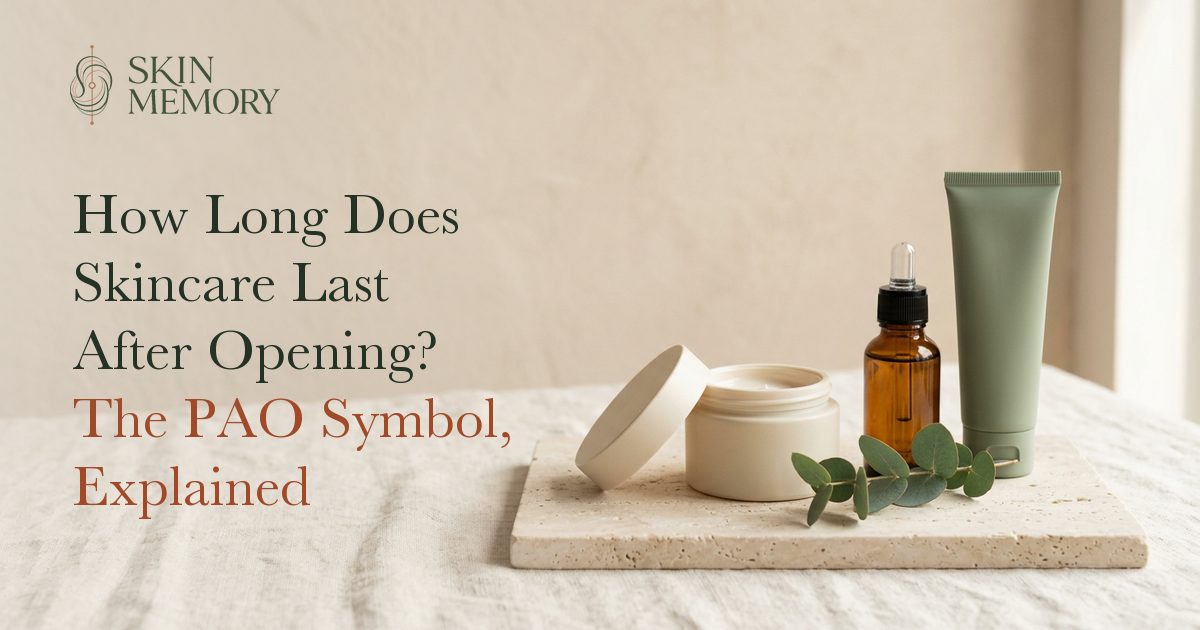
Most skincare is labelled with how long it lasts after opening, not with a fixed expiry date. The small open-jar symbol with a number and "M", such as 6M or 12M, is the period after opening (PAO): the number of months the product is meant to be used for once opened. In the EU, products that last more than 30 months must show it. In the US, the FDA does not require expiration dates on cosmetics at all, though sunscreens and other products regulated as drugs must carry one. The catch is that the PAO counts from a date almost nobody writes down: the day you opened it.
What does the PAO symbol mean?
The PAO symbol is a small drawing of an open jar with a number inside or next to it, followed by "M" for months. "12M" means the product is intended to be used within 12 months of first opening. It is not a date. It is a countdown that starts when the seal is broken.
The definition comes from EU law. Article 19 of the EU Cosmetics Regulation (EC) No 1223/2009 describes it as the period after opening for which the product is safe and can be used without harm to the consumer, shown with the open-jar symbol set out in Annex VII.
PAO vs expiration date: which one applies?
There are two different clocks, and a product usually shows only one of them.
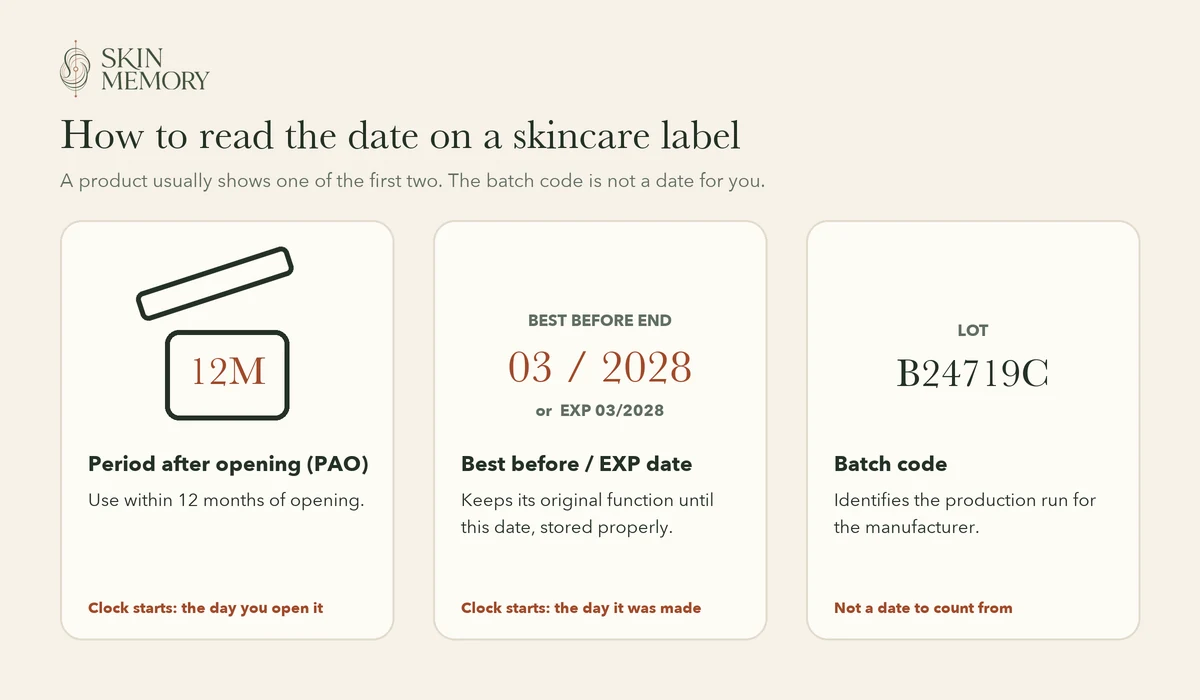
| Label | What it means | When the clock starts |
|---|---|---|
| Open-jar symbol (e.g. 12M) | Use within this many months once opened | The day you open it |
| "Best before the end of" or "EXP" date | The product keeps its original function until this date, stored properly | The day it was made |
| Batch code only | Identifies the production run for the manufacturer | Not a consumer date |
Under the EU rule, products whose minimum durability is 30 months or less must show a "best used before the end of" date. Products that last longer than 30 months show the PAO instead. Some products are exempt, such as single-use items and aerosols. The UK keeps the same rule in its retained version of the regulation.
In the United States, the FDA's page on shelf life and expiration dating of cosmetics states that no US law or regulation requires cosmetics to have specific shelf lives or expiration dates on their labels. Manufacturers are responsible for making sure their products are safe, which includes knowing their shelf life. Many brands print a PAO symbol anyway, because they also sell in the EU.
The FDA draws one important line: products regulated as drugs, including sunscreens and acne treatments, must be stability tested and must carry an expiration date.
Does skincare expire? What the FDA says
Yes, but not on a fixed timetable. The FDA describes expiration dates on cosmetics as "rules of thumb", and notes that a product's safety can expire well before its date if it has not been stored properly, for example in a hot car or a steamy bathroom. It also notes that eye-area products generally have shorter shelf lives than other cosmetics.
Mayo Clinic's guidance on sunscreen, which is regulated as a drug in the US, says the FDA requires sunscreens to keep their original strength for at least three years. Its advice for a bottle with no expiration date is to write the purchase date on it and discard it after three years, or sooner if it has been exposed to high heat or looks or smells different. See Mayo Clinic's sunscreen FAQ.
Why the clock starts at opening
Opening a product exposes it to air, light, fingers and whatever else is nearby. Preservatives are designed to cope with normal use for a period of time, not indefinitely.
Research on used cosmetics shows why that period matters. A 2020 study in the Journal of Applied Microbiology by Bashir and Lambert at Aston University tested used lipsticks, lip glosses, eyeliners, mascaras and beauty sponges donated by UK consumers. Between 79 and 90 percent of the used products were contaminated with bacteria, and many were past their expiry dates. The authors called for clearer expiry information and better consumer awareness. That study looked at make-up rather than skincare, but the principle is the same for any product you dip into or touch repeatedly.
Packaging plays a part too. Pumps, airless bottles and tubes limit how much air and how many fingers reach the product, compared with an open jar.
Typical PAO ranges by product type
These are common ranges, not rules. The number printed on your product always takes priority.
| Product type | PAO you will often see |
|---|---|
| Mascara and liquid eyeliner | 3M to 6M |
| Products with a dropper (serums, oils) | 6M to 12M |
| Moisturisers and creams in jars | 6M to 12M |
| Cleansers in pumps or tubes | 12M |
| Sunscreen | Check for a printed expiry date first |
| Powders | 12M to 24M |
Signs a product may have changed
Whatever the label says, a product that has changed is worth noticing. Common signs include:
- A different smell, especially a sour or rancid one
- Separation that does not mix back in, or a grainy or lumpy texture
- A change in colour
- A pump or dropper that has become crusted or discoloured
None of these tells you anything about your skin. They are a reason to look at the product's dates and, if in doubt, to stop using it and ask a pharmacist.
How to remember when you opened a product
The PAO only works if you know the opening date, and most people do not. A few habits help:
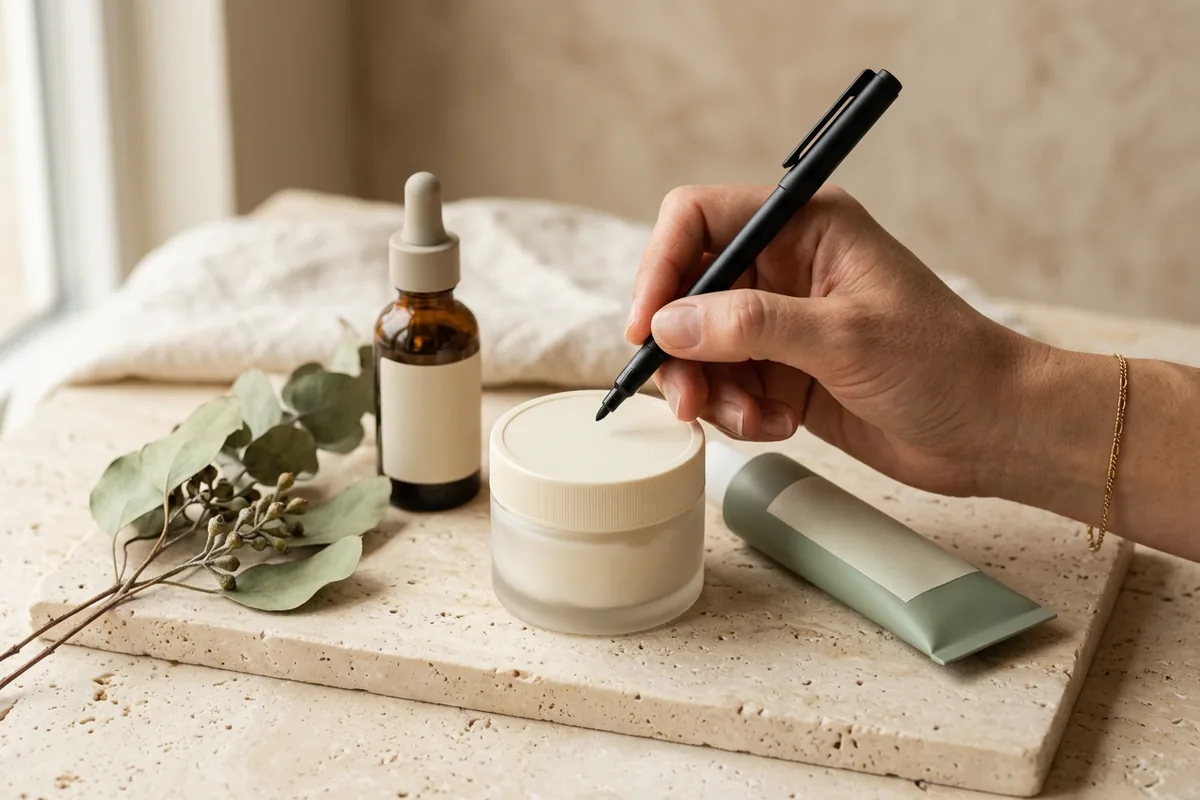
- Write the date on the packaging with a permanent marker on the day you open it.
- Log the opening date somewhere you will see it again, such as a notes app or a skincare journal.
- Open one at a time. Opening every backup at once starts every clock at once.
- Check dates when you restock. A replacement is a new opening date, and sometimes a new formula.
- Store away from heat and steam. A cupboard outside the bathroom is often better than a windowsill.
Knowing the opening date also helps with something beyond freshness. If your skin changes, being able to say when you started a product, and how long you had been using it, is part of the timeline a doctor or pharmacist may ask about, as how to describe a skin reaction covers.
Where Skin Memory fits
Skin Memory does not track expiry dates or tell you when to throw a product away. What it does record is when each product joined your shelf, when you paused, swapped or stopped it, and what you noticed along the way. If you log a product on the day you open it, that start date doubles as your opening date, and you can count forward from it to the PAO on the label.
That same record is what makes products you have already forgotten findable again, and it keeps a timeline of what you used and when. You can download Skin Memory for Android.
If something on your skin concerns you, talk to a doctor or pharmacist, and bring the dated record with you.
FAQ
How long does skincare last after opening?
Check the open-jar symbol on the packaging: the number followed by "M" is how many months the product is meant to be used for once opened. Common values range from 3M for mascara to 12M or 24M for many creams, cleansers and powders.
What does 12M mean on skincare?
It means the product is intended to be used within 12 months of first opening. The symbol is called the period after opening, or PAO.
Do unopened skincare products expire?
Yes, eventually. In the EU, products that last 30 months or less must show a "best used before" date. Products that last longer show a PAO, which applies once opened. Storage conditions such as heat can shorten either.
Does the FDA require expiration dates on skincare?
Not for cosmetics. The FDA says no US law requires expiration dates on cosmetic labels. Products regulated as drugs, including sunscreens and acne treatments, must carry an expiration date.
Is it safe to use skincare past its PAO?
The PAO is the period the manufacturer has assessed for use after opening. Using a product beyond it means using it outside that period. If a product has changed in smell, colour or texture, or you are unsure, ask a pharmacist.
Is this medical advice?
No. It is general information. If something concerns you, talk to a doctor or pharmacist.