Updates & Insights

A Free Printable Skincare Log (PDF), and How to Use It
A four-page printable skincare log: a starting point, a shelf list, a change log and daily notes. Free, no email needed, in A4 and US Letter. Here's how to fill it in.

Two Skincare Products With the Same Active Ingredient: What to Check
A toner and a serum can both contain the same acid, and a cleanser and a spot treatment can both contain salicylic acid. Here is how to spot the overlap, why it matters, and what to note.
Why It's Hard to Tell if a Skincare Product Is Working
Most products take at least six weeks to show anything, skin changes on its own, and memory rewrites the starting point. Here is why the question is hard, and a fairer way to look at it.

What Does Non-Comedogenic Mean? What the Label Does and Doesn't Promise
Non-comedogenic means a product was made to avoid clogging pores. There is no legal definition and no required test behind the word. Here is what it tells you, and what to note.

What Does pH Balanced Mean on Skincare? The Label Explained
Skin's surface is mildly acidic, around pH 4.7 to 5.5. 'pH balanced' suggests a product sits near that range, but the phrase has no legal definition. Here's what it tells you, and what to note.

Does Pollution Affect Your Skin? What Research Says
Studies link traffic-related air pollution with more pigment spots and other signs of skin ageing across large groups of people. Here is what the research shows, where it stops, and what to note.

How to Track Your Skincare Routine: A Simple System That Holds Up
Tracking a skincare routine is less about daily notes and more about dating the changes. Here's a simple system: map the routine once, log every change on the day, and read it back weekly.

What to Look for in a Skincare Tracker App: A Practical Checklist
A good skincare tracker keeps dates, separates products from observations, and is honest about what it can't tell you. Here's a checklist for choosing one, including questions to ask about privacy.

How Much Sunscreen Should You Use on Your Face? Amounts, Explained
The SPF on a label is measured at 2 milligrams per square centimetre of skin, which is more than most people apply. Here's what dermatology bodies suggest for the face, and how to keep it consistent.

Why Your Skin Changes When You Travel: Flights, Climate and Routine
Cabin air is dry, destinations change the climate and the water, and routines slip. Here's what research says about air travel and skin, and why a trip is many changes at once.

Does Hard Water Affect Your Skin? What the Research Says
Hard water can leave more cleanser residue on skin, and studies link it with higher rates of eczema in children. But softened water hasn't been shown to improve existing eczema. Here's the research, plainly.

Does Your Menstrual Cycle Affect Your Skin? What Research Says
Studies report premenstrual acne flares in a large share of women, and some measure small changes in the skin barrier across the cycle. Here's what research says, and why cycle day is worth noting.

What Is Skin Cycling? The Four-Night Routine, and What the Evidence Says
Skin cycling is a four-night rotation: exfoliate, retinoid, then two nights of recovery. Here's where it came from, what the evidence does and doesn't cover, and how to keep track of it.
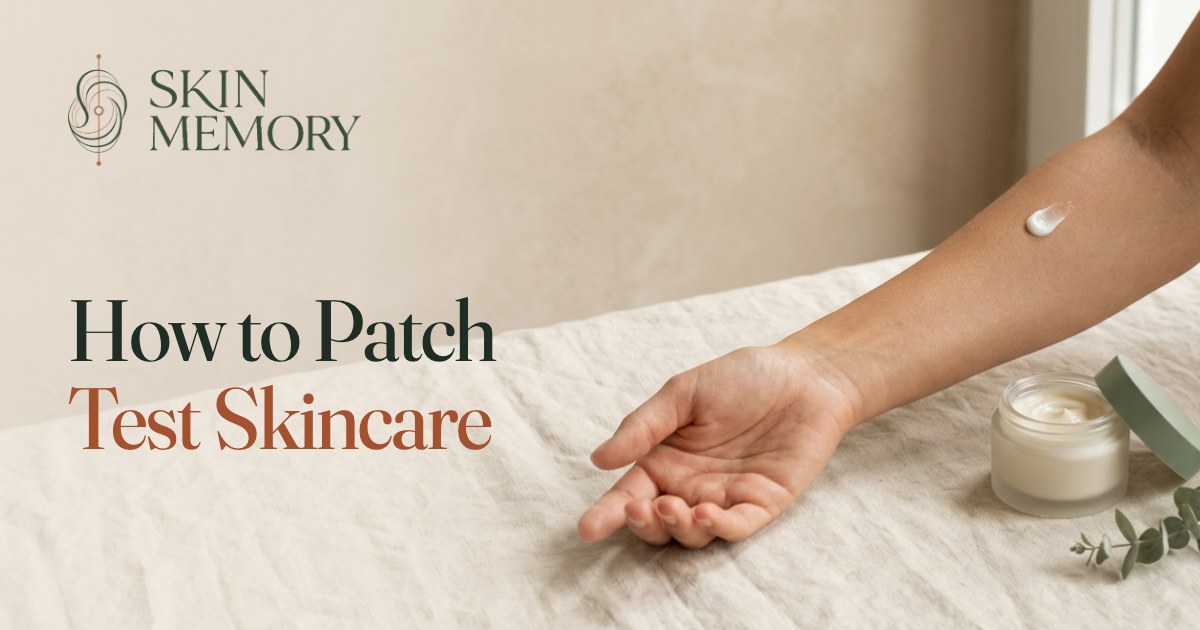
How to Patch Test Skincare: Where, How Long, and What to Write Down
Dermatologists suggest testing a new product on a small patch of skin twice a day for seven to ten days. Here's how to do it, what a home test can't tell you, and what to note.

Fragrance-Free vs Unscented: What the Labels Actually Mean
Unscented usually means a product has no noticeable smell, which can involve adding a masking fragrance. Fragrance-free is the label to look for if you avoid fragrance, but it is still worth checking the list.
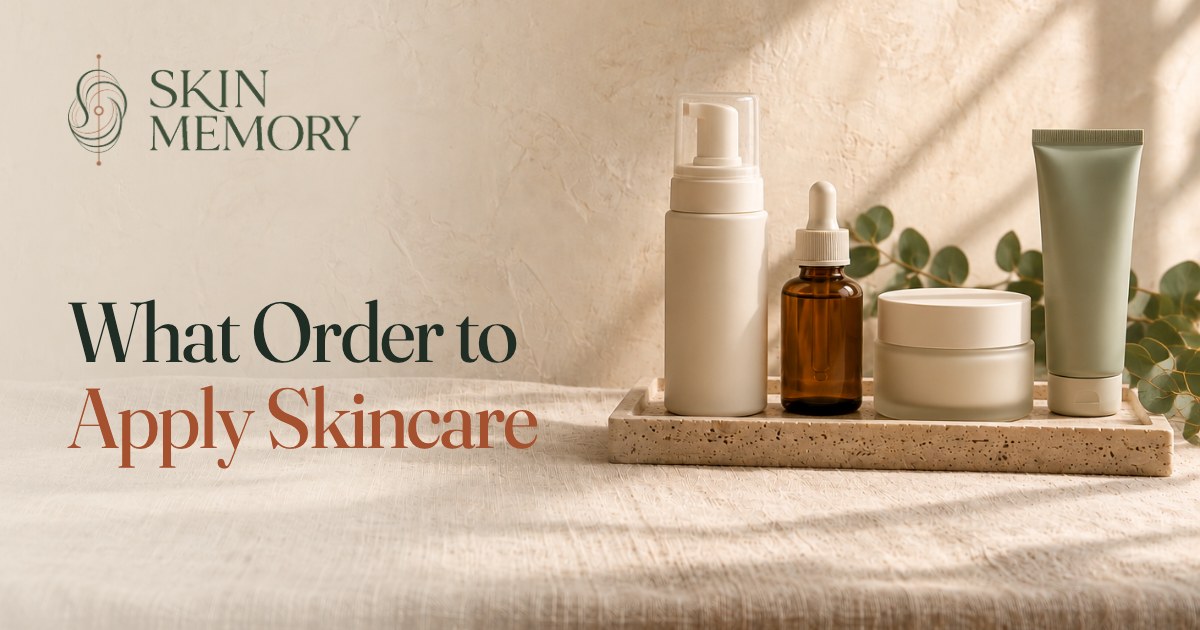
What Order Should You Apply Skincare? A Simple Routine Order, Explained
Dermatologists suggest a simple sequence: cleanse, treat, moisturise and protect, then makeup. Here's the order, where common products fit, and why moving a step counts as a change.
How to Read a Skincare Ingredient List: What the Order Tells You
The order of a skincare ingredient list follows legal rules, but only part of it is ranked by amount. Here's how to read it, what it can't tell you, and why to keep a copy.

Why Your Skin Changes in Winter: What Research Says About Cold, Dry Air
Cold air outside and heating inside both pull moisture from the air. Here's what research says about winter and the skin barrier, what dermatologists suggest, and what to note down.

How Long Does Skincare Take to Work? What Research Says About Timelines
Some products do their job the day you use them. Others are measured in weeks or years. Here's what research says about timelines, and how to give a product a fair trial.

How Long Does Skincare Last After Opening? The PAO Symbol, Explained
That little open-jar symbol with "12M" is a countdown that starts the day you open the product. Here's what it means, what the rules say, and how to keep track.

How to Keep a Skincare Journal: What to Write Down, and When
A skincare journal is only useful if it is accurate. Here's what diary research says about writing things down at the time, and the six things worth recording.

How to Describe a Skin Reaction to a Doctor or Pharmacist
A clinician will ask when, where and how it changed. Here's how to write a skin change down clearly, take photos that help, and keep your guess separate from what you saw.

How to Introduce a New Skincare Product: One Change at a Time
Adding three products at once leaves you with three suspects. Here's what patch-test research says about timing, and a calm, one-change way to try something new.
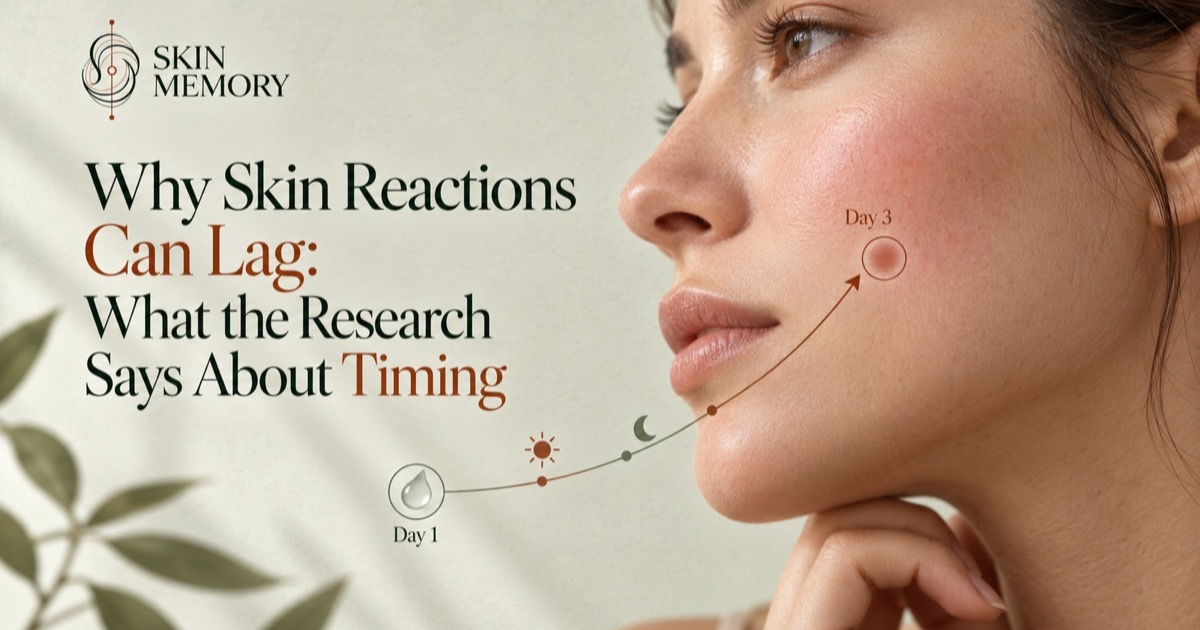
Why Skin Reactions Can Lag: What the Research Says About Timing
Allergic reactions can take days to appear, irritation can build slowly, and skin renews over weeks. Here's what the timing research says and why a longer lookback helps.

Why Memory Is the Weakest Record of Your Skincare Routine
Recall research shows memory fills gaps with inference, and a repetitive routine is one of the hardest things to remember. Here's what makes a skincare record worth keeping.
The Skincare Products You've Already Forgotten
Most people can only name two or three of the skincare products they've used in years. Here's why that forgetting costs you money and repeat mistakes, and how a record fixes it.
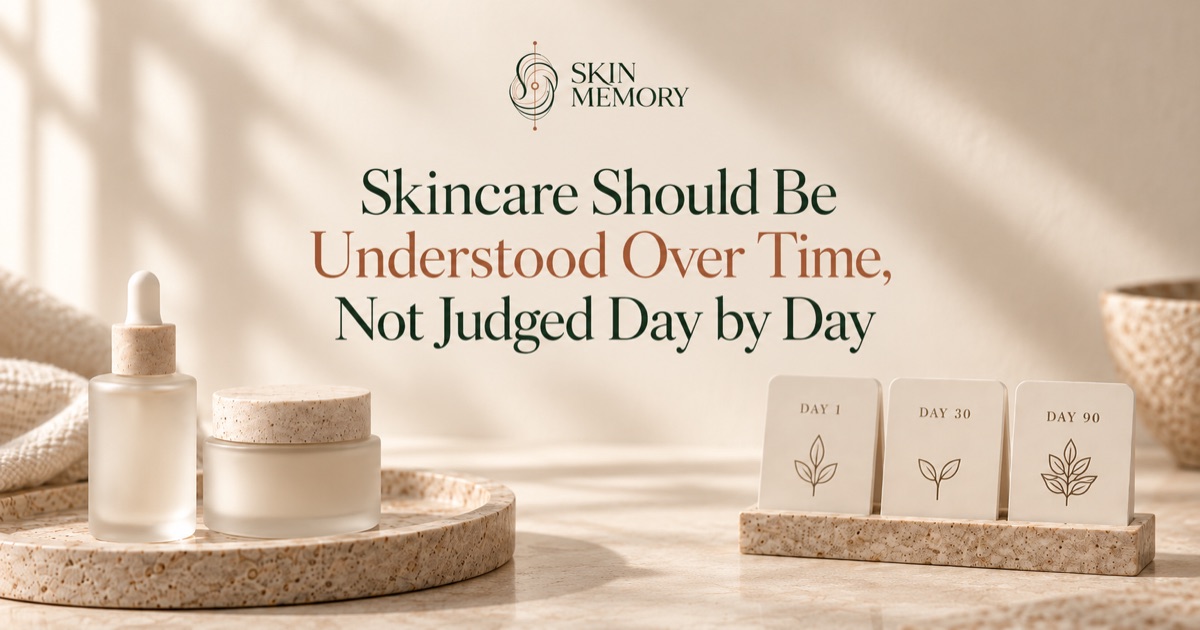
Skincare Should Be Understood Over Time, Not Judged Day by Day
A single bad skin day doesn't mean a product failed. Here's why skincare needs to be read over weeks and months, not judged by a daily verdict.

The Reconstruction View: A Better Way to Find What's Behind a Skin Reaction
Most people trying to trace a reaction are relying on memory alone, days later, right when memory is least reliable. Here's what a logged timeline gives you instead.

Why Skincare Apps Shouldn't Diagnose You
A face scan can't see the two weeks before a reaction. Here's why a timeline matters more than a risk score, and what to check before trusting either.