If you only have 60 seconds
Many people notice their skin feels drier or tighter in winter, and research on the skin barrier helps explain why that is common. A 2016 review in the *Journal of the European Academy of Dermatology and Venereology* concluded that low humidity and low temperatures reduce skin barrier function and make skin more vulnerable to mechanical stress and more reactive to irritants. Indoor heating lowers humidity too, so winter dryness does not stop at the front door. Winter also tends to bring several changes at once, from a richer moisturiser to hotter showers, which is exactly when a dated record is most useful.
What cold, dry air does to the skin barrier
The outermost layer of skin works as a barrier: it keeps water in and irritants out. How well it does that depends partly on the air around it.
A 2016 review by Engebretsen and colleagues in the Journal of the European Academy of Dermatology and Venereology pulled together research on climate and skin. Its conclusions:
- Low humidity and low temperatures reduce skin barrier function, and make skin more vulnerable to mechanical stress, such as friction from clothing or towels.
- Skin becomes more reactive to irritants and allergens in those conditions, with changes in the skin's own inflammatory signalling.
- Cold, dry weather is associated with more flares in people with atopic dermatitis, a form of eczema.
None of that tells you what is happening on your own skin on a given day. It does explain why "my skin always gets like this in winter" is such a common experience.
Indoor heating counts too
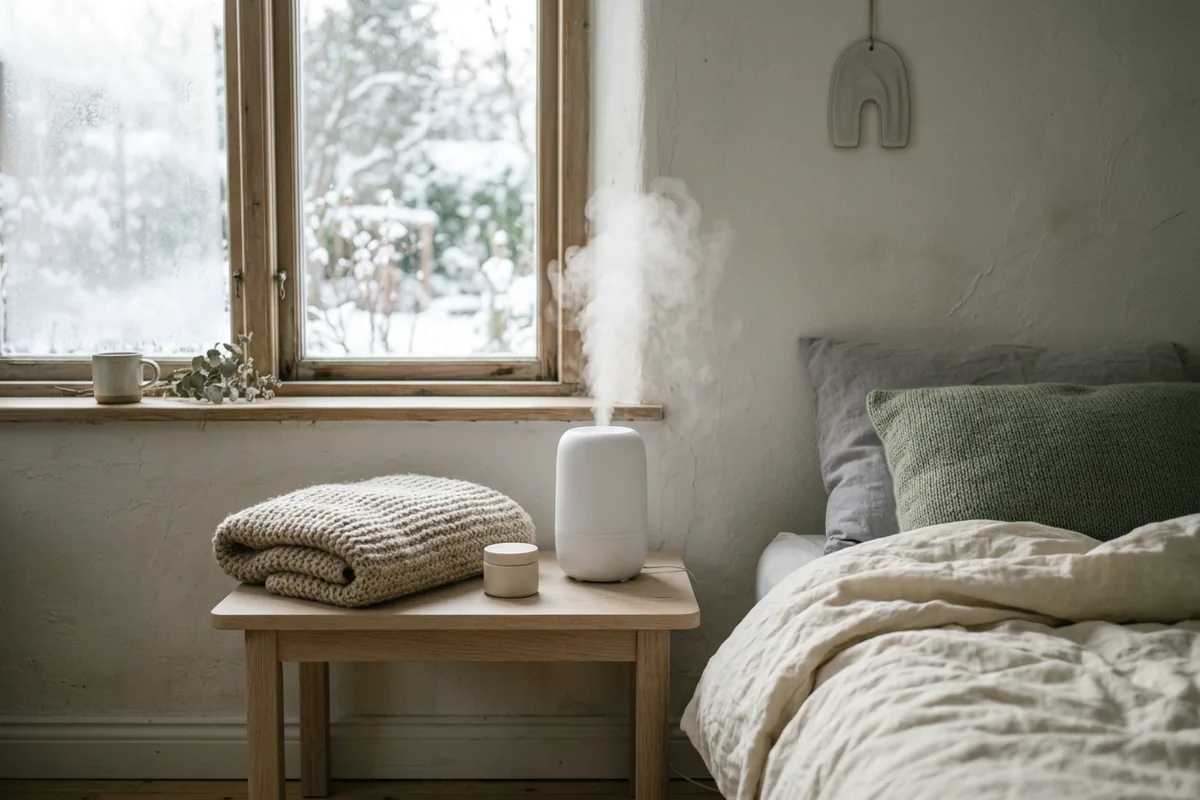
Winter air is dry outside, and heating dries it further inside. The American Academy of Dermatology's tips for relieving dry skin note that some home heating systems lower the humidity in your home, which is why they suggest a humidifier. Many people spend most of a winter day indoors, so the indoor air may matter as much as the weather.
What dermatologists suggest for dry winter skin
The AAD's dry skin guidance includes these steps. They are general tips, not a diagnosis or a treatment plan:
- Keep showers and baths to five to ten minutes, in warm water rather than hot.
- Pat skin dry, then moisturise straight away with a fragrance-free moisturiser.
- Choose a cream or ointment when skin feels dry, and massage it in gently.
- Use a humidifier, for example in the bedroom while you sleep, and clean it regularly to prevent mould.
- Wear gloves for washing up, gardening and other wet or rough work.
- Keep lips covered with a lip balm or petroleum jelly.
- Keep wearing sunscreen with SPF 30 or higher on exposed skin, even in winter.
If dry or itchy skin does not settle, or anything concerns you, talk to a pharmacist, doctor or dermatologist.
Winter brings several changes at once
Here is the catch for anyone keeping track of their skin. The season changes the air, and it usually changes the routine as well, often in the same week:
- A richer moisturiser replaces the summer one
- Showers get longer and hotter
- An exfoliant gets used more, to deal with flakiness, or less, because skin feels sensitive
- New wool clothes, scarves and gloves come out
- Travel to somewhere colder for the holidays
If your skin changes in December, the weather is one candidate among several. Introducing one product at a time matters most exactly when the season is already changing everything else.
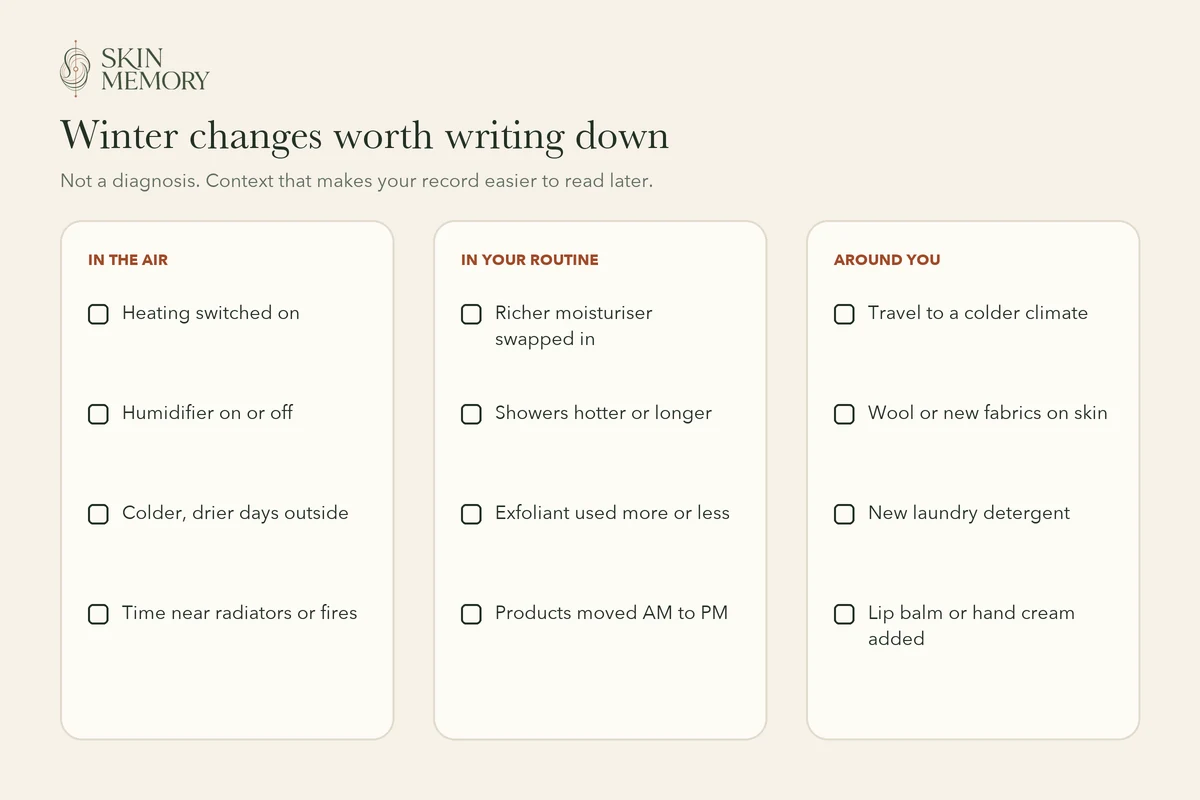
What to write down this winter
You do not need to track the weather in detail. A short note on the days things change is enough:
- When the heating went on. One line, with the date.
- Every product swap, including "same moisturiser, but now twice a day". A change in how often you use something is a change.
- What you notice, in your own words, and where. "Tight across the cheeks by evening" is more useful later than "dry".
- Context that came with the season: travel, a new humidifier, new fabrics, longer showers.
- A short note when spring comes. The end of the heating season is a change too.
Next winter, that record lets you compare like with like: what your skin did last November, what you changed, and when. That is the kind of slow reading skincare should be understood over time argues for, and it means you are not relying on memory, the weakest record, to reconstruct a whole season.
Where Skin Memory fits
Skin Memory keeps that record without asking you to interpret it. The change log records winter swaps, pauses and changes in how often you use something, with the date. The daily journal lets you note how your skin feels, and Note a response records an observation like dryness or tightness without the app deciding what it means. Notes about heating, travel or the weather go in your own words.
Over a year, your skin history and timeline let you scroll back to last winter and see what was on your shelf and what you noticed. If something changes, the reconstruction view shows what was logged in the 30 days before, in order, without naming a cause. A skincare journal habit is what makes that view worth opening. You can download Skin Memory for Android.
If something on your skin concerns you, talk to a doctor or pharmacist, and bring the dated record with you.
FAQ
Why does my skin get dry in winter?
Research links cold temperatures and low humidity with reduced skin barrier function, and indoor heating lowers humidity further. That is a general explanation of why winter dryness is common. It does not diagnose what is happening on your own skin.
Does indoor heating dry out skin?
The American Academy of Dermatology notes that some home heating systems lower indoor humidity, and suggests a humidifier for dry skin, for example in the bedroom while you sleep.
What do dermatologists suggest for dry skin in winter?
The AAD suggests short showers in warm water, patting skin dry and applying a fragrance-free cream or ointment straight away, using a humidifier, wearing gloves, using lip balm and continuing to wear sunscreen.
Should I change my skincare routine in winter?
That is your call, or your clinician's. If you do change it, change one product at a time and note the date, so that you can tell the season's effect apart from the new product's.
Do I still need sunscreen in winter?
The AAD's dry skin tips include sunscreen with SPF 30 or higher on exposed skin, alongside shade and protective clothing.
Is this medical advice?
No. It is general information. If something concerns you, talk to a doctor or pharmacist.